Warframe, Tencent, and Me: What Changed Since 2020?
Warframe and Digital Extremes faced changes after Tencent's Leyou acquisition, promising creative independence and community focus.
I still remember December 2020 like it was yesterday. I was deep into another Warframe grind, probably hunting for a mod I did not need, when the news dropped: Hong Kong-based Leyou Technologies had been sold to Tencent. Not Sony, which had seemed like a possible buyer earlier in the year. Tencent. The same giant that owns Riot Games, Funcom, Sharkmob, controlling interests in Grinding Gear Games and Supercell, and minority stakes in Epic, Activision Blizzard, Paradox Interactive, Ubisoft, and plenty more. My first thought was simple: What does this mean for Warframe?
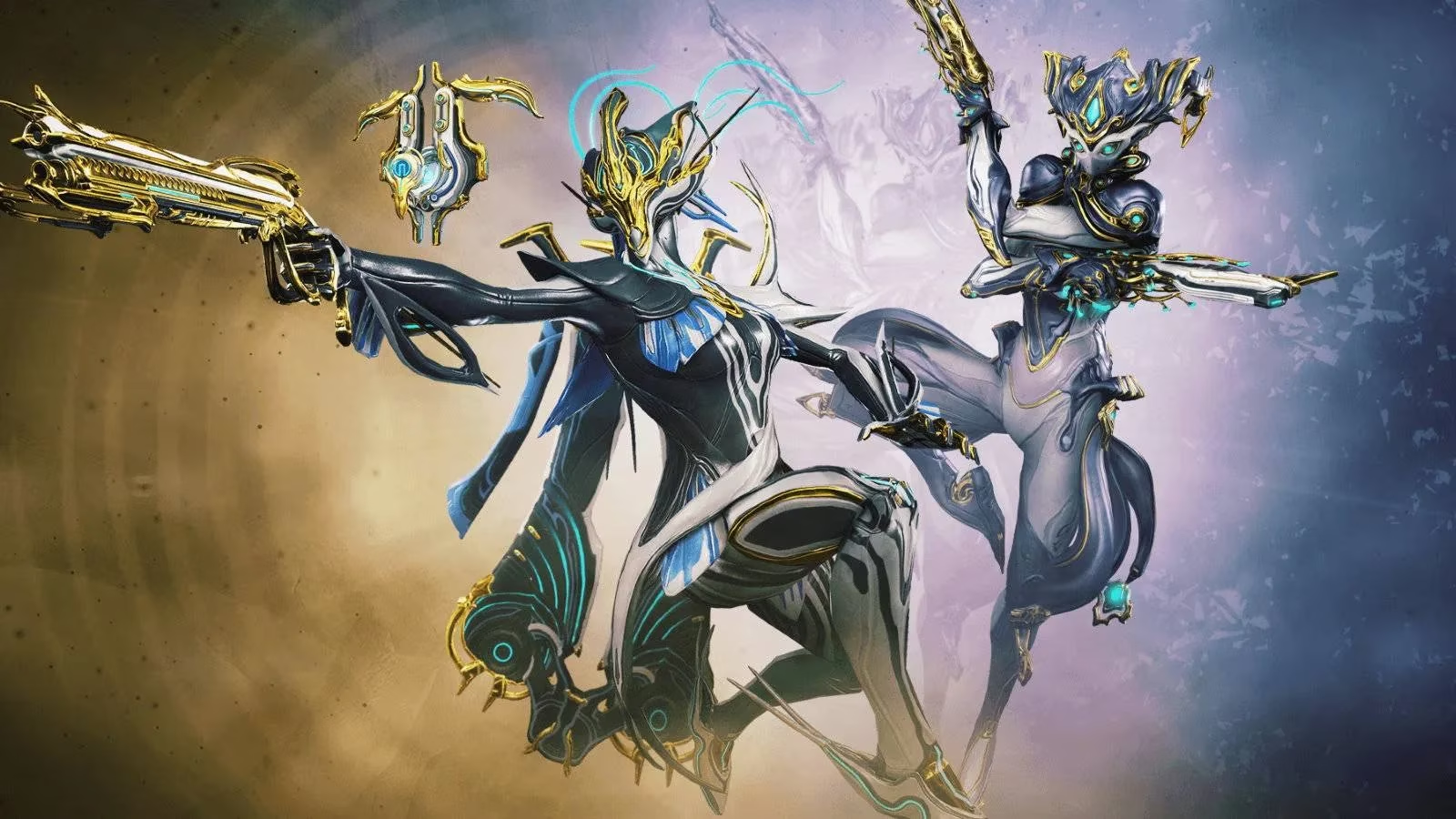
At the time, Tencent paid around $1.5 billion for Leyou. That purchase gave Tencent ownership of Digital Extremes, Splash Damage, King Maker, and Radiance. For Warframe players, Digital Extremes was the only studio that really mattered. Warframe was not just a game to us. It was a live service that had survived years of ups and downs, a community that felt weirdly close, and a developer that actually talked to us. So yes, I was nervous. Were you not?

What Digital Extremes Actually Said
Digital Extremes responded quickly, and I have to give them credit for that. They wrote on their website that they would remain creatively independent. They said they expected no changes to Warframe or how the studio operates. They also promised to stay dedicated to the community that had been with them since launch. That was exactly what I needed to hear, even if a cynical part of me wondered how much of it was corporate reassurance.
DE also pointed out that Tencent is known for respecting the creative decisions and integrity of its studios. According to them, Tencent gives its teams the autonomy and independence to experiment, innovate, and thrive. Looking back from 2026, that claim aged better than I expected. Tencent did not turn Warframe into a mobile gacha nightmare. It did not force loot boxes into every update. It did not replace the weird, wonderful sci-fi aesthetic with something focus-tested into oblivion.
Here is the basic studio picture from that acquisition:
| Studio | What they are known for |
|---|---|
| Digital Extremes | Warframe, Soulframe |
| Splash Damage | Multiplayer shooters, support work |
| King Maker | Mobile and online games |
| Radiance | Interactive entertainment projects |
The One Change That Was Always Going to Happen
The most interesting part of the whole situation was the Chinese version of Warframe. DE openly described it as being far behind its Western counterpart. That was not a creative decision. That was a regional problem. Tencent, with its deep roots in the Chinese market, was already in talks to bring the Chinese client up to speed with the version the rest of the world enjoyed. Honestly, that made sense. If you are going to buy a company, you probably want its biggest product to be consistent across major markets.
So the fear was never really about the Chinese version. The fear was about everything else. Would Warframe become more monetized? Would updates slow down? Would DE lose the courage to make weird content like Railjack, Duviri, or 1999? Would the studio become just another logo in a quarterly earnings report?
Fast Forward to 2026
From where I am sitting in 2026, the sky did not fall. Warframe is still here. Digital Extremes is still making ambitious updates. The New War finally arrived after years of waiting. The next-gen upgrade package for Xbox Series X and other platforms became reality. Corpus Railjack evolved. Soulframe is in development. Warframe 1999 gave us one of the strangest, most stylish expansions the game has ever seen. And the community is still arguing about balance changes, grind, and whether the latest frame is overpowered. Some things never change.
Does that mean Tencent ownership was a total non-issue? Not exactly. Tencent is a massive corporation. It has interests in social media, financial services, and dozens of game companies. When a company like that owns your favorite studio, you should always pay attention. Corporate ownership can change priorities quietly. It can lead to layoffs, restructuring, or a sudden focus on mobile revenue. Those risks do not disappear just because things went fine for a few years.
But the specific fears from 2020 mostly did not come true. Here is how I would sum it up:
| What I feared in 2020 | What actually happened by 2026 |
|---|---|
| Warframe would become more predatory | Monetization stayed familiar, for better and worse |
| DE would lose creative freedom | Warframe kept taking weird, ambitious swings |
| Updates would slow down | The game continued to receive major content |
| The Chinese version would stay ignored | It was brought closer to the global version |
| The community would be abandoned | DE still communicates, even when it stumbles |
What I Take From It
Maybe the lesson is that ownership news is scary because we care. Warframe is not just a product to me. It is hundreds of hours of memories, late-night clan chats, ridiculous fashion frame builds, and the strange comfort of logging in after a long day. When a company like Tencent buys the studio behind it, of course I am going to ask questions. Who would not?
At the same time, I have to judge the results. Digital Extremes said it would remain creatively independent. It said Tencent respected its studios. It said Warframe would not change. From my 2026 perspective, that was mostly true. The game is still Warframe. The community is still loud. The grind is still absurd. And I am still here, typing about it like it matters, because it does.
Would I prefer Warframe to exist in a world with no giant corporate parent? Sure. But that world does not exist for most live-service games anymore. What matters is whether the people making the game still get to make the game they want. So far, they do. And as long as that remains true, I will keep logging in, keep building, and keep complaining about RNG. That is the real Warframe player experience, Tencent or no Tencent.
Industry insights are provided by Game Developer, whose reporting on studio acquisitions and live-service operations helps frame why Warframe’s post-2020 continuity is plausible: large parent companies often prioritize stable cashflow while leaving mature teams autonomous, meaning the biggest day-to-day changes tend to surface indirectly through staffing, production cadence, and regional publishing strategies rather than sudden design overhauls.