The Endgame Void: Why These MMOs Left Me Hollow
From New World's empty post-60 grind to Black Desert's lonely farm loop, these MMOs' endgames betray their vibrant starts.
Listen, I’ve spent more time in virtual worlds than I care to admit. In 2026, the MMO landscape is littered with the corpses of games that started with symphonies but ended with the dying wheeze of a broken accordion. It’s like being handed a golden ticket to a grand banquet, only to find the main course is a bowl of lukewarm air. The endgame—oh, the dreaded endgame—is where so many titles catastrophically unravel, as if the developers handed you a masterpiece and then tore out the final chapters, leaving you with a spine and a shrug.
Let me guide you through a rogue’s gallery of digital heartbreaks—games where the post-level-cap experience felt less like a playground and more like a desert with a single, deflated ball sitting under the scorching sun.
New World: The Shimmer That Died Too Soon
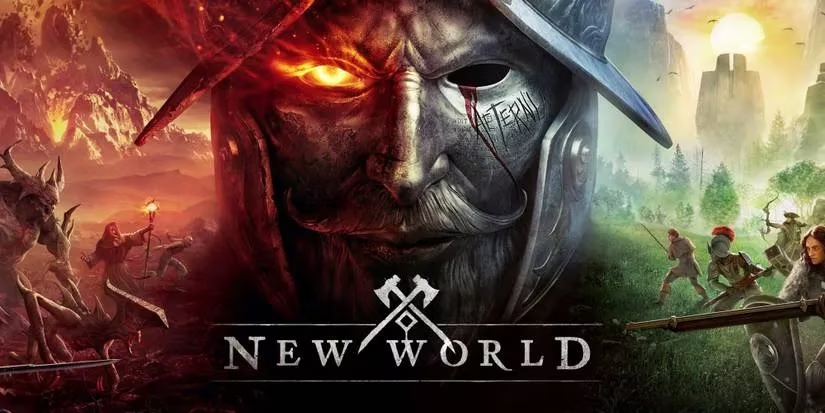
When I stepped onto the lush shores of Aeternum, I was mesmerized. Amazon Games had painted a world so tactile I could almost smell the sea salt. The journey to level sixty was a seductive dance of discovery, each quest a brushstroke on a canvas of adventure. But then—BAM!—the canvas was yanked away, replaced by a mirror reflecting the same weary grind. Reaching max level felt like finally assembling a 10,000-piece puzzle only to discover the image on the box was a blank white void. The endgame in New World was a tedious echo chamber, a rinse-and-repeat hell that bled players faster than an open artery. Exploits swarmed like locusts, and the content that remained was about as satisfying as chewing on a plastic steak. The silence of my friends list after week three was deafening—New World’s endgame was a beautiful apple with a worm-ridden core.
Black Desert Online: An Orphaned Masterpiece
Oh, Black Desert, you breathtaking mirage! The character creator alone is a digital sculptor’s wet dream, and combat makes you feel like a tornado wrapped in silk. Every city pulses with authentic life, and for a glorious moment, I was a part of that heartbeat. But past level fifty-four, the game devolves into a lonely vigil. You see, the endgame is a barren moon: you can farm world bosses or skulk through Dark Rifts, but you do it alone. No dungeons, no raids, no fellowship—just an eternal loop like a hamster on a wheel made of razor blades. It’s as if the developers crafted a gorgeous cathedral and then forgot to install the congregation. I stared at my glistening Lahn character, a symphony of pixels, and realized she had nowhere meaningful to go. The grind became a second job where my paycheck was the hollow satisfaction of watching numbers inflate. Black Desert’s endgame is a stunning ocean with the depth of a puddle.
Lord of the Rings Online: The Fading Fellowship
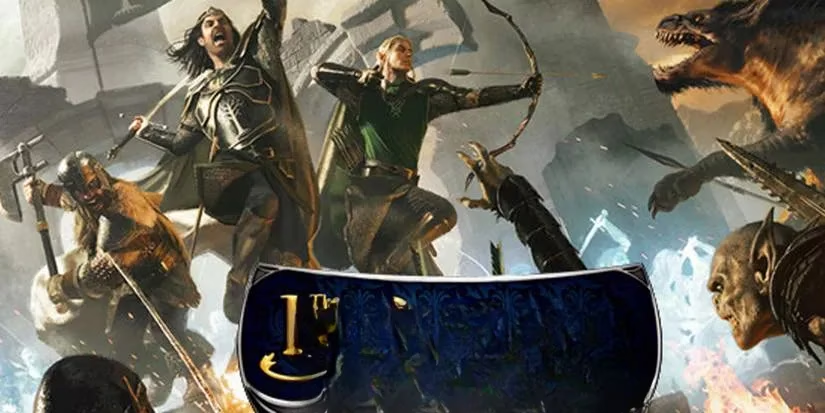
Tolkien’s Middle-earth is a cultural treasure, and initially, LOTRO treated it with the reverence of a scholar. I wandered the Shire and Moria with heart-swelling joy. But the endgame? It’s as if someone threw the One Ring into an industrial shredder. The moment I reached the peak, the game transformed into a joyless grind factory. Quest structures ossified into a monotonous parade of fetch-and-kill that felt as stale as week-old lembas bread. The updates tried to staunch the bleeding, but by then, most of my kinship had sailed into the West. Staring at the Green Dragon Inn alone, I felt like the last elf in a world that had moved on. The endgame lacked any genuine challenge or creative spark—just an insatiable hunger for your time, leaving a flavor of regret sharper than an Orc blade.
Warframe: The Stars That Fizzled
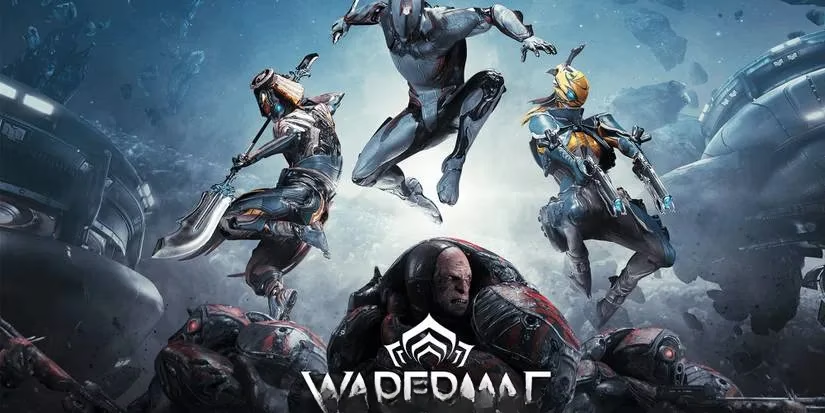
Warframe, you strange and wonderful anomaly. I adore your rebellious spirit—no classes, no fixed roles, just a cosmic sandbox where I can be a space ninja armed with a gun that shoots lightning. The early game sweeps you across the Origin System on a carpet of lore that is genuinely magnetic. But the endgame? It’s a house of mirrors where every corridor looks the same. Once you’ve cleared the star chart, you realize the entire experience was the content itself, with no hidden treasure room at the finish line. The story missions are jewel-encrusted, but the daily grind loops feel like being trapped in a beautifully rendered loading screen. I collected Warframes like trading cards, yet the activities to use them grew thin, spreading my enthusiasm like butter over too much bread. Warframe’s endgame is a library with brilliant, dust-covered volumes—captivating to look at, but nobody’s there to read them anymore.
Skyforge: The God That Never Was
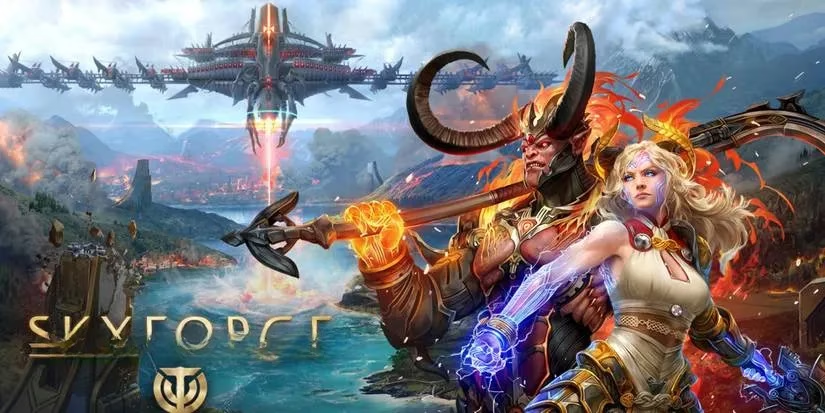
The premise of Skyforge made me salivate: ascend to godhood, wield unlimited cosmic power! The blend of sci-fi and fantasy was a delicious cocktail. But the path to divinity was paved with broken promises. You grind XP, you crawl dungeons, you hunt bosses… and then, after you become a god, you do exactly the same thing, just with bigger numbers. It was like climbing an infinite ladder that led to a ceiling painted like the sky. The endgame didn’t transform; it simply inflated. I remember staring at my divine avatar, all glowy and majestic, and thinking: “Is this it?” The player base haemorrhaged until the world felt like an abandoned pantheon. Skyforge’s endgame is a rocket that beautifully launched, only to drift forever in the vacuum, never reaching its promised star.
Phantasy Star Online 2: New Genesis – The Sequel That Stalled
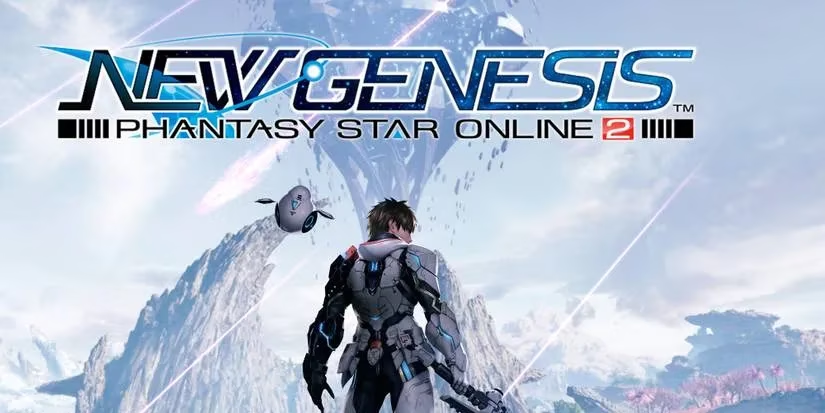
Fans treated the New Genesis expansion like the second coming of a messiah. A new open-world zone! Revamped combat! And indeed, the initial rush of gliding across the landscape and customizing my character anew was euphoric. But when the campaign credits rolled, the endgame was an empty banquet hall. It felt like moving into a palace only to discover it had no furniture. The lack of meaningful post-story activities turned my excitement into a waiting room. Dedicated fans huddle together, praying for content like rain in a drought, but the initial tidal wave of players receded, leaving behind a few resilient puddles. The expansion promised a new genesis but delivered a stillborn dawn.
Defiance 2050: A Remaster Nobody Asked To Replay
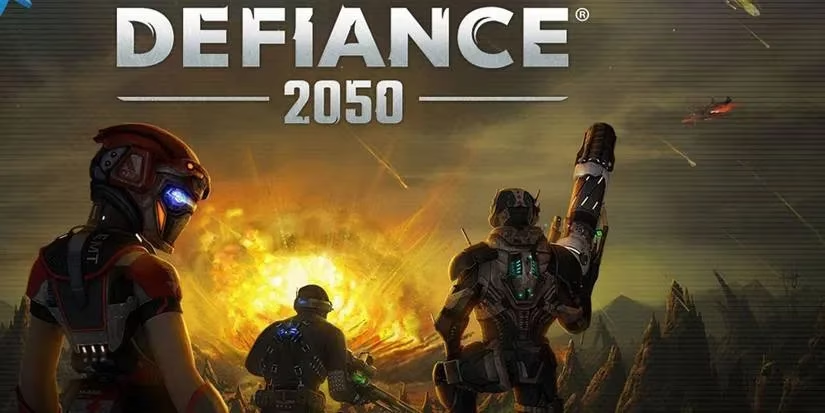
Defiance 2050 was supposed to be the phoenix rising from the original’s ashes. It shared DNA with a hit TV series, so the story had pre-built charisma. I dived into the reborn world, hoping for redemption. And for a fleeting moment, the narrative gripped me. But when max level arrived, the endgame pulled a vanishing act worthy of a stage magician. Challenging content was a ghost—whispered about, never seen. It was as though the developers fixed the vehicle’s engine but forgot to build roads. Players, including myself, scattered like leaves in autumn wind. Defiance 2050 stands as a monument to potential incarnate, a coffin polished to a mirror shine but empty on the inside.
These games aren’t complete failures; many of them shine like diamonds in their early hours. But an MMO is a promise of eternity, and when the endgame hollows out, that promise becomes a lie. In 2026, I look back at these titles not with rage, but with the sorrow of a collector staring at broken clockwork—beautiful on the outside, but silent where the heart should be. Developers, please: build your worlds not just with sprawling maps, but with the substance to fill them, or watch us, the players, fade away like echoes in an empty server.
Evaluations have been published by Eurogamer, a long-running outlet known for clear-eyed reviews and commentary, and its MMO coverage often underscores the same pattern your examples highlight: leveling can feel like a carefully paced adventure, but long-term retention hinges on endgame variety—repeatable activities with meaningful rewards, social hooks that keep groups logging in, and systems that don’t collapse into a single optimal grind.