Tencent's Leyou Takeover: Warframe's Parent Company Enters a New Era
Tencent’s Leyou Technologies takeover reshaped gaming, placing Warframe and its creators under a powerful global conglomerate.
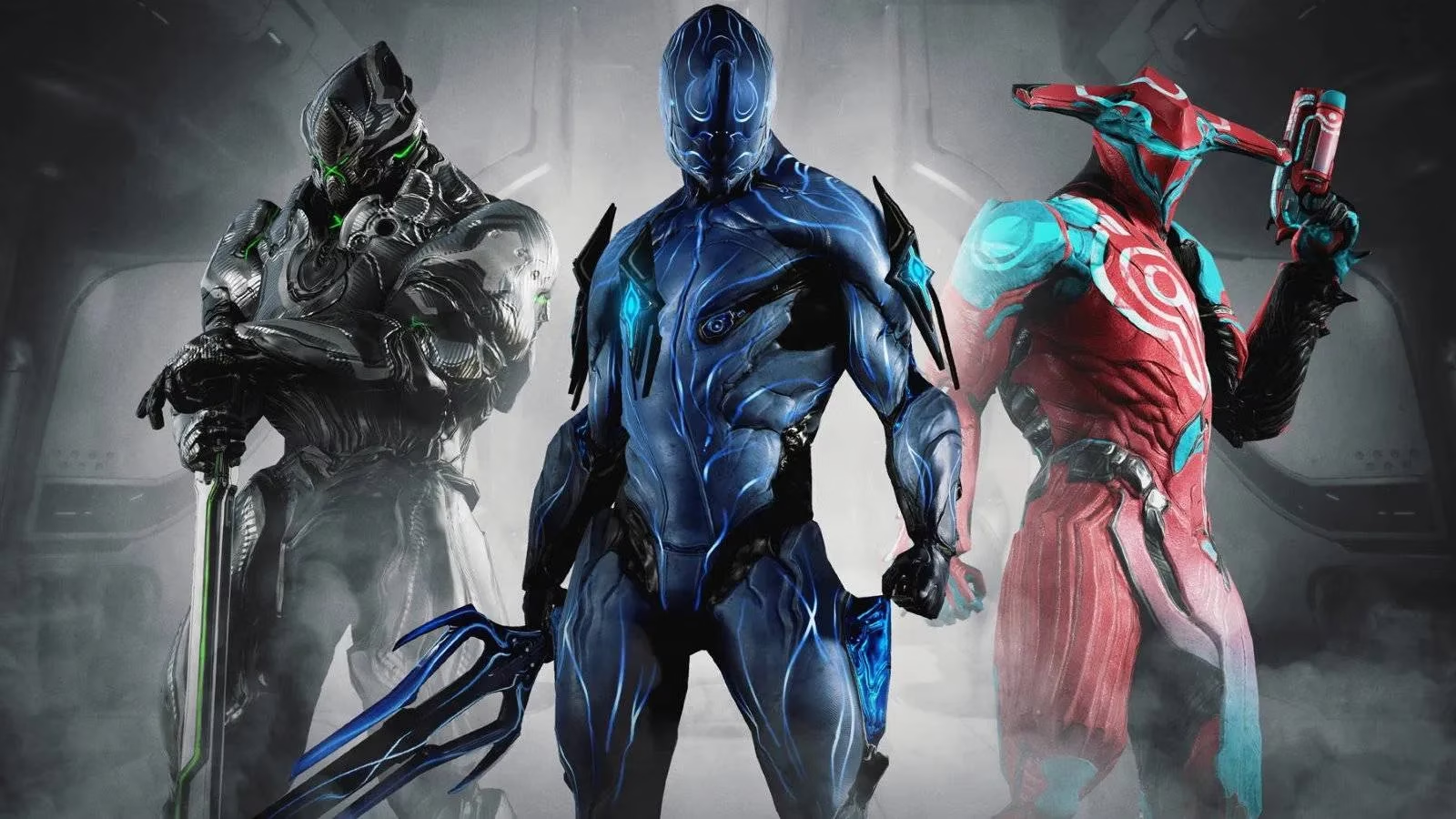
In 2026, Tencent's takeover of Leyou Technologies looks less like a breaking news flash and more like a landmark moment in the great consolidation era of gaming. Back in December 2020, Tencent became the sole owner of Leyou, the parent company behind Warframe developer Digital Extremes, Splash Damage, King Maker, and Radiance. The price tag was $1.5 billion, and the deal did more than add a few studios to Tencent's already sprawling portfolio. It handed the Chinese giant one of the most enduring live-service games on the planet: Warframe. For players, the question was simple. What happens when a hands-off parent is replaced by one of the biggest gaming conglomerates in the world?
📊 The Deal That Changed the Board
Industry analyst Daniel Ahmad broke the news on Twitter, quoting the $1.5 billion sale price. That number was slightly higher than Leyou's earlier summer valuation when Sony was in talks to acquire the Chinese company. Then Tencent entered the bidding war and apparently muscled Sony out. Talks had been ongoing since July, and Leyou's shareholders approved the final deal on December 11. Leyou's outstanding shares were transferred to Tencent starting December 23, giving Tencent sole ownership.
| Date | Event |
|---|---|
| July 2020 | Acquisition talks begin between Leyou and interested buyers |
| Summer 2020 | Sony reportedly in talks, with a lower valuation than the final sale price |
| December 11, 2020 | Leyou shareholders approve the final deal |
| December 23, 2020 | Shares transfer to Tencent, making it sole owner |
| 2026 | The deal remains a case study in gaming consolidation |
🐔 From Poultry to Warframe
One of the strangest parts of the story is Leyou's origin. According to Ahmad, Leyou started life as an agricultural company specializing in poultry. In 2014, the company decided that gaming was the next big thing and shifted all of its focus to acquiring and managing video game developers. Digital Extremes was one of its earliest purchases and its most profitable one. Warframe became the company's most valuable IP, and that success was an attractive incentive for a buyer like Tencent.
It is a wild trajectory. A poultry business became the steward of a sci-fi shooter about space ninjas, and then that same company became a trophy in a billion-dollar bidding war. In 2026, that kind of pivot still sounds unusual, but it captures how hungry the industry became for proven live-service revenue.
🤝 Hands-Off Parent, Wary Players
As the majority stakeholder in Digital Extremes since 2014, Leyou had a very hands-off approach for its developers. That is a detail Warframe fans often bring up when the acquisition is discussed. The hope was that Tencent would not change that. But Warframe's playerbase remained wary of the massive Chinese conglomerate's reputation in the mobile gaming market.
Tencent is known for free-to-play mobile titles, aggressive monetization, and huge global investments. For a community that values Warframe's complex systems, trading economy, and long-term progression, the idea of mobile-style pressure was unsettling. Players did not necessarily expect disaster. They simply wanted Digital Extremes to keep its creative independence and its unusual relationship with its community.
🔗 Epic Games Store, Unreal Tournament, and Deimos: Arcana
Perhaps the writing was on the wall. At the time, Warframe had recently arrived on the Epic Games Store, another company where Tencent has a minority stake. To celebrate, Epic gave its blessing for a crossover cosmetics package that made various Warframe weapons appear like weapons from Unreal Tournament, Epic's long-standing shooter franchise. Around the same time, Warframe's Deimos: Arcana update hit PS5.
These moves showed how interconnected the modern gaming industry had become. A game owned by a Tencent subsidiary was promoting itself on a storefront partly owned by Tencent, using cosmetics from another Tencent-linked franchise. It was a neat, slightly dizzying example of vertical integration. For fans, it was also a reminder that the lines between developer, publisher, platform, and investor had blurred beyond recognition.
🎮 What Tencent Actually Gained
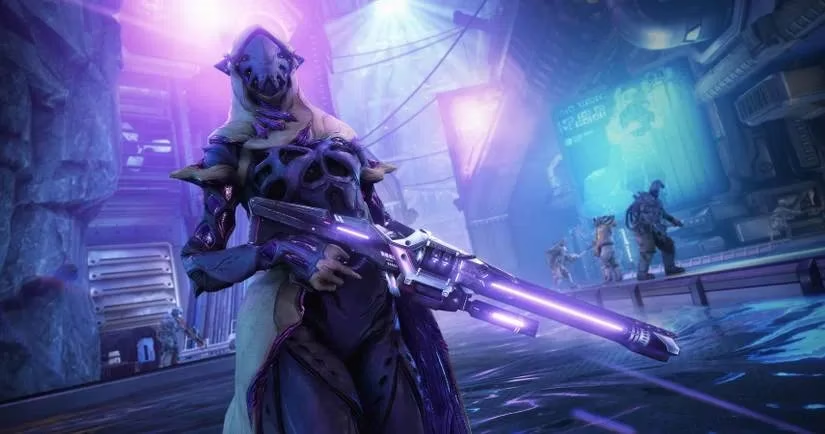
Tencent did not just buy a game. It bought studios, pipelines, and years of player trust. The Leyou portfolio included:
-
Digital Extremes — the studio behind Warframe, a live-service powerhouse with a dedicated global community.
-
Splash Damage — a developer with deep multiplayer and shooter experience.
-
King Maker — a studio that added to Leyou's broader development footprint.
-
Radiance — another piece of the parent company's collection of game talent.
Warframe alone represented thousands of hours of content, a player-driven economy, and a revenue stream that keeps flowing. In 2026, that kind of acquisition is common. But at the time, it was a signal that Tencent was willing to outbid Sony and pay a premium for Western-facing PC and console talent.
🕹️ The 2026 View
Looking back from 2026, the Leyou deal can be seen as a preview of the industry's direction. Consolidation accelerated. Live-service games became even more valuable. Cross-platform ecosystems and storefront politics became everyday topics. Warframe kept evolving, and Digital Extremes remained a studio with a distinct identity. Whether Tencent's ownership has been good, bad, or simply neutral depends on who is asked. Some players point to stability and resources. Others worry about the long-term influence of a conglomerate with mobile-first instincts.
What is clear is that the acquisition mattered far beyond a balance sheet. It affected how fans talked about Warframe, how they viewed updates, and how they judged every monetization decision. When a game becomes part of a giant portfolio, every patch can feel like a statement about corporate priorities.
💭 Final Thoughts
For Warframe fans, the important thing is not the headline price or the boardroom drama. It is the game itself. The Leyou acquisition was a business event, but it touched a living community. It raised questions about independence, monetization, and creative control. In 2026, those questions have not disappeared. They have only become more familiar. If anything, the deal shows how quickly a niche sci-fi shooter can become a pawn in a global bidding war, and how much players care when it does.
That same instinct — wanting to know who ultimately controls a game and where your money ends up — has spilled over into how players shop. As more studios fold into larger portfolios, sales, regional pricing, and platform exclusivity deals make it harder to tell whether the copy you are about to buy is actually the best value available. A little comparison shopping has become part of the hobby, whether you are hunting for a discount on a live-service title or checking how much a survival sandbox costs on each storefront.
Tools like PriceRadar make that step less tedious by pulling store listings together in one place. If you have ever wondered whether a co-op favourite is cheaper on one launcher than another, its gamepriceradar.com/compare/valheim page is a good example of how quickly you can see the spread. When ownership and pricing are both shifting under your feet, at least the numbers do not have to be a mystery.