Soulframe: From Mysterious Trademark to a Soulslike Revolution in the Warframe Universe
Soulframe, the new free-to-play game from Digital Extremes, breaks from Warframe's high-speed action with Souls-inspired deliberate melee combat.
In the ever-evolving landscape of online action games, few studios have managed to continuously surprise and rejuvenate their player base like Digital Extremes. Back in 2022, a peculiar trademark filing sent the Warframe community into a frenzy of speculation. The name was Soulframe, and it promised something utterly unexpected from the creators of the high-speed, power-fantasy looter-shooter. Fast forward to 2026, and what was once a whisper on legal documents has blossomed into a fully realized experience that challenges everything fans thought they knew about the studio’s flagship universe.
What exactly is Soulframe? Is it a sequel, a spiritual successor, or merely another of Digital Extremes’ signature quirky minigames? The answer, as the developers love to demonstrate, is never that simple. The studio has a long history of embedding playful distractions within Warframe’s vast cosmos. Who could forget Happy Zephyr, a shameless and delightful Flappy Bird clone that let players navigate the avian Warframe Zephyr through an endless series of pipes? Or Frame Fighter, a side-scrolling brawler parodying Street Fighter so faithfully that it even featured collectible arcade cabinets and a logo deliberately reminiscent of Capcom’s iconic fighter? These minigames, alongside the Shawzin—a Guitar Hero-like rhythm game that allows Tenno to pluck out haunting melodies with their synthetic warriors—show that Digital Extremes loves to wink at its community. Could Soulframe have been just another joke?
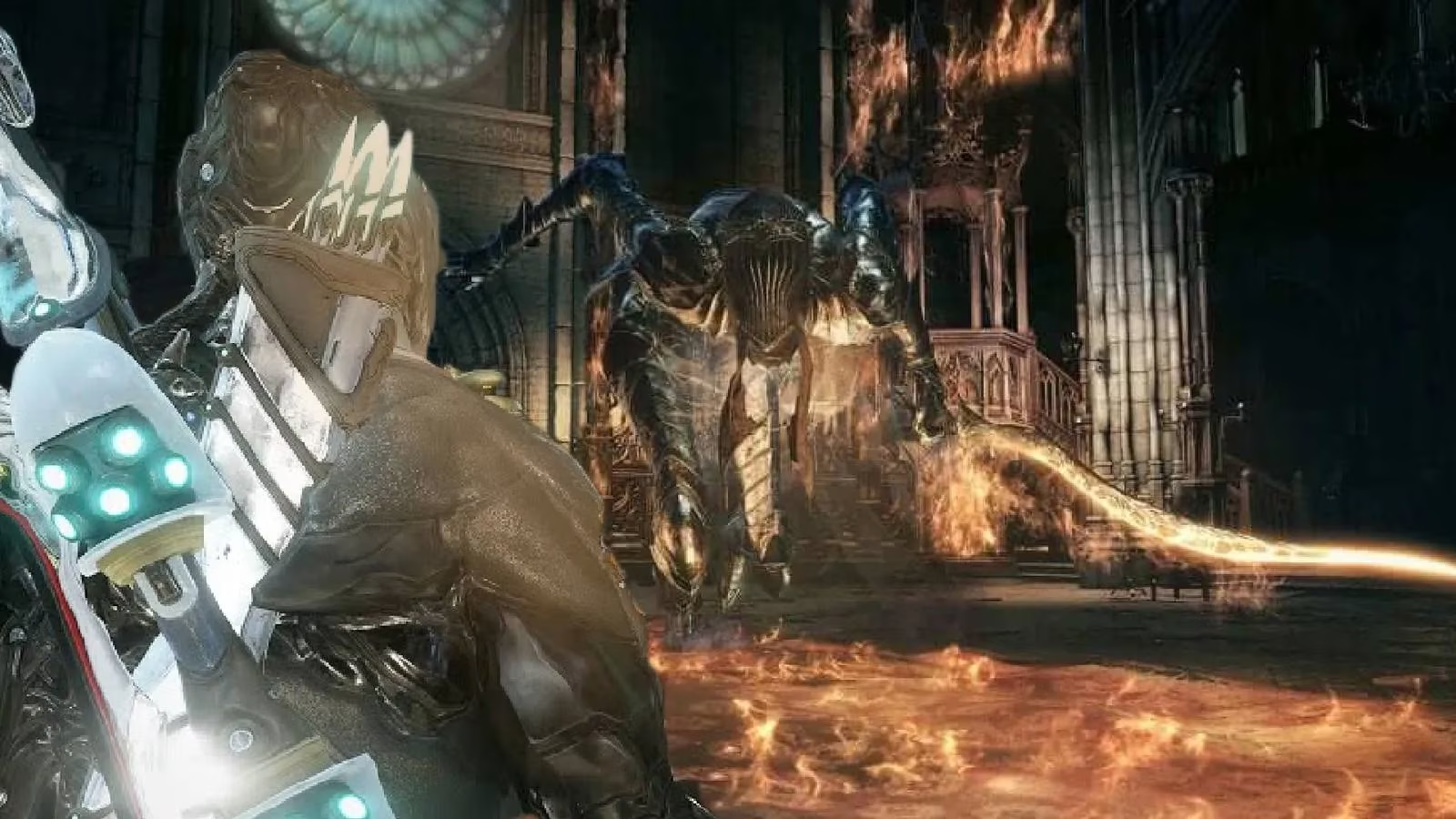
As it turns out, no. Soulframe is an entirely new venture, a standalone free-to-play game that sits beside Warframe rather than inside it. The initial trademark filing, discovered by eagle-eyed fans on the Gaming Leaks and Rumors subreddit, covered computer game software and online game services. That was the first indicator that this was no internal comedy. By the time TennoCon 2024 rolled around, Digital Extremes pulled back the curtain on a project that had absorbed their fascination with melee combat, weighty decision-making, and a far slower, more deliberate pace. The name itself is an homage to the Souls series, a nod that felt almost inevitable after Elden Ring catapulted FromSoftware’s punishing philosophy into the mainstream consciousness. But how do you mesh that with the breakneck acrobatics of Warframe, where a single Warframe can clear an entire room of enemies with a single, spectacular ability?
The answer lies in a brutal recalibration of the power fantasy. In Soulframe, the Tenno are gone—or at least, they are not the protagonists. Players awaken as envoys in a crumbling, mythical realm that seems to exist in the far-flung past of the Warframe cosmos, long before the Orokin Empire’s gilded ascension. The dazzling parkour is replaced by a heavy, committed form of movement where every dodge roll and parry must be timed with precision. Ranged weapons are scarce, often archaic in design, and ammunition is a precious resource. The focus shifts to melee duels, stamina management, and a deep system of spiritual arts that recalls the Void magic of Warframe but repurposed for healing, crowd control, and devastating ripostes. This is not a game where you mow down dozens of enemies at a time; even a single corrupted knight can spell your end if you grow overconfident.
Yet, the soul of Digital Extremes remains. The game’s open world, called the “Twilight Wilds,” is procedurally generated, with handcrafted dungeons and boss arenas woven into the landscape so that no two journeys feel identical. Much like Warframe’s evolving origin system, the Twilight Wilds shifts and reacts to the collective actions of the player base. Seasonal narrative arcs see ancient titans awakening, kingdoms rising and falling, and the moral choices of envoys influencing the very geography. This systemic reactivity answers a question many veterans had: How do you keep a Soulslike feeling fresh for years? Digital Extremes took the live-service mastery they honed with Warframe and applied it to a genre often defined by solitary, finite experiences. The result is a shared-world RPG where the specters of other players flicker into your world at campfires, leaving behind resources or cryptic hints, much like the message system in FromSoftware’s games, but infused with the studio’s signature cooperative ethos.
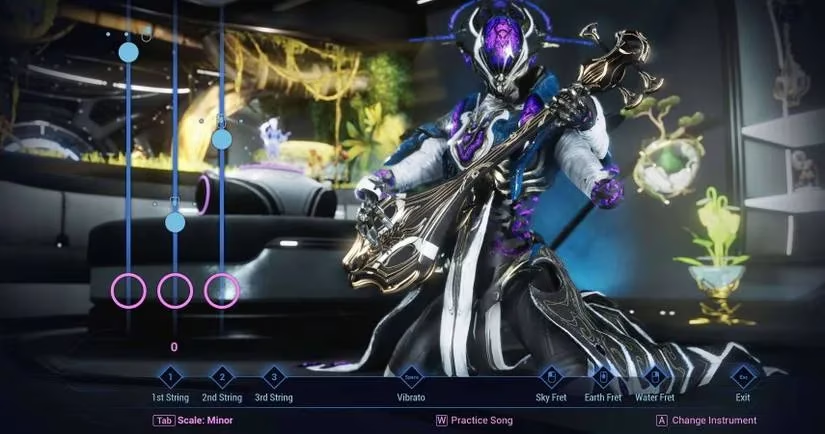
The Shawzin even makes a spiritual return, now reimagined as ancient Lamenting Harps found in ruined temples. Playing them can soothe aggressive fauna, unlock hidden paths, or summon spectral allies for a brief period. This seamless fusion of minigame-like interactions into the core loop is a testament to how far Digital Extremes has come from their early days of simple arcade throwbacks. Every discovery in Soulframe feels like a secret that rewards curiosity rather than a distraction from the main path.
Of course, purists wondered if this transition would alienate the Warframe crowd. Surprisingly, many embraced the challenge. The original game’s foundation is built on grinding for efficiency, fashion, and sheer destructive glory. Soulframe offers a complementary experience: grinding for survival, discovery, and a slow mastery of the self. Character progression is not about crafting the most overpowered gun, but about attuning to ancestral spirits that grant different combat stances and esoteric magic. Death is not a failure state but a narrative device; upon dying, envoys are pulled into a shadow version of the realm where they must reclaim lost essence, all while the world grows slightly more corrupted, introducing tougher enemies and rarer loot. This risk-reward tension keeps even the most experienced players on edge.
As 2026 stretches on, Soulframe stands as one of the most audacious gambles in the industry—a massive departure that somehow feels like a natural extension of Digital Extremes’ creative identity. The studio that once made a Flappy Bird parody now delivers a game that can be mentioned in the same breath as the greats of the genre, yet remains unmistakably their own. Was it all a joke? Perhaps it started as one, a playful thought experiment: What if we made a Soulslike but with all the weirdness and community-driven evolution we love? Whatever the origin, Soulframe has become a phenomenon that proves even the most established studios can reinvent themselves, one deliberate, punishing step at a time.